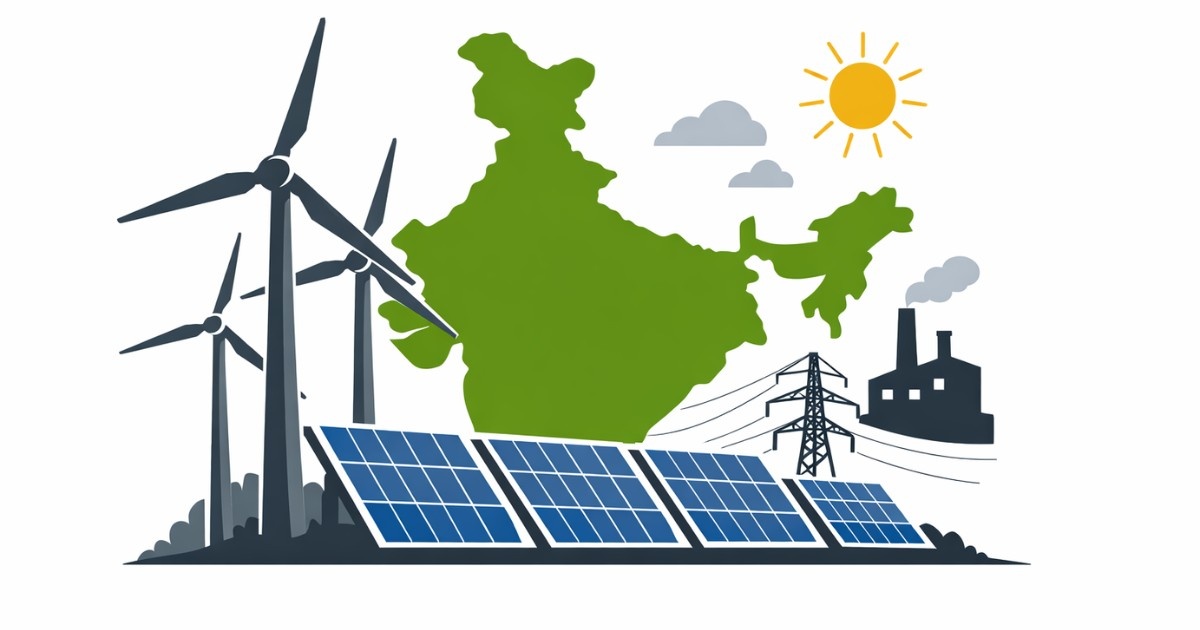
India Crosses 200 GW Renewable Energy Capacity Mark, Achieves Major Clean Power Milestone
India has crossed a major renewable energy milestone by surpassing 200 gigawatts (GW) of installed clean power capacity. The achievement marks a significant step in the country’s long-term energy transition plan and strengthens its position among the world’s leading renewable energy producers.
The development is trending across business and policy circles as investors, industry leaders, and state governments assess what this milestone means for the economy, power supply, and climate goals.
Crossing the 200 GW renewable capacity mark signals both progress and growing ambition in India’s clean energy journey.
What Does 200 GW Renewable Capacity Mean?
Understanding the Scale
A gigawatt (GW) is equal to 1,000 megawatts (MW). Crossing 200 GW means India now has over 200,000 megawatts of renewable energy capacity installed across various sources.
Renewable energy includes:
- Solar power
- Wind energy
- Hydropower
- Bioenergy
- Small hydro projects
This total represents installed capacity, not daily generation. However, it reflects the scale of clean energy infrastructure built across the country.
Breakdown of India’s Clean Energy Portfolio
India’s renewable capacity is driven mainly by solar and wind power.
Solar Energy
Solar energy has seen rapid expansion in recent years. Large solar parks and rooftop systems have played a key role.
India is among the world’s largest solar markets, with both utility-scale and distributed solar projects contributing to growth.
Wind Energy
Wind power remains a major contributor to the renewable mix, especially in states like:
- Tamil Nadu
- Gujarat
- Karnataka
- Maharashtra
Wind projects continue to support grid stability and long-term clean generation.
Hydropower and Bioenergy
Large and small hydropower plants contribute significantly to renewable capacity. Bioenergy projects also support rural and agricultural regions.
Together, these sources have helped India move past the 200 GW mark.
Why This Milestone Matters for India
1. Energy Security
India imports a large share of its fossil fuel requirements. Expanding renewable energy reduces dependence on imports.
Clean energy improves:
- Long-term energy security
- Stable power supply
- Protection from global fuel price shocks
Renewables reduce exposure to volatile international markets.
2. Climate Commitments
India has made international climate commitments, including expanding non-fossil fuel power capacity.
Crossing 200 GW strengthens India’s credibility in global climate discussions.
The country has also set a larger long-term target of 500 GW of non-fossil capacity by 2030.
This milestone shows progress toward that goal.
3. Economic Growth and Investment
The renewable energy sector attracts domestic and foreign investment.
Large-scale projects generate:
- Construction jobs
- Manufacturing demand
- Infrastructure development
- Technology partnerships
Clean energy growth also boosts related sectors such as battery storage and electric mobility.
States Driving Renewable Growth
Several Indian states have led renewable expansion.
Key contributors include:
- Rajasthan
- Gujarat
- Tamil Nadu
- Karnataka
- Maharashtra
Rajasthan and Gujarat, in particular, have become solar hubs due to land availability and policy support.
Wind-rich coastal states continue to expand wind energy installations.
Role of Policy and Government Initiatives
India’s renewable growth has been supported by policy measures such as:
- Competitive bidding processes
- Solar park schemes
- Production-linked incentives (PLI) for manufacturing
- Renewable purchase obligations (RPOs)
- Green energy corridors
These initiatives have lowered costs and improved investor confidence.
Government-backed auctions have helped bring down solar and wind tariffs over the years.
Impact on Power Consumers
Renewable energy helps diversify India’s power mix.
In the long term, it can contribute to:
- Stable electricity prices
- Reduced pollution
- Cleaner urban air
- Improved rural electrification
However, integration into the grid requires balancing solutions, such as storage and flexible power systems.
Challenges Ahead Despite 200 GW Achievement
While crossing 200 GW is a major milestone, challenges remain.
1. Grid Integration
Renewable energy is weather-dependent.
Managing variability requires:
- Energy storage systems
- Grid upgrades
- Smart transmission networks
Investments in battery storage and pumped hydro are critical.
2. Land and Infrastructure Issues
Large solar and wind projects require land and transmission lines.
Clearances and local approvals can sometimes delay projects.
3. Manufacturing Capacity
India is working to reduce dependence on imported solar modules and equipment.
Boosting domestic manufacturing remains a priority.
The Production-Linked Incentive scheme aims to strengthen this area.
Investment Trends in Clean Energy
Renewable energy continues to attract significant capital.
Investors view clean energy as:
- Long-term stable infrastructure
- Environmentally responsible investment
- Growth-oriented sector
Global climate funds and green bonds have also supported project financing.
Business searches related to “renewable energy stocks,” “solar sector growth,” and “clean energy investment” have increased after the 200 GW announcement.
Global Comparison
India ranks among the top countries globally in renewable energy capacity.
Major global players include:
- China
- United States
- European Union nations
India’s rapid growth over the past decade has placed it firmly in the top group of clean energy markets.
Road to 500 GW by 2030
The next big goal is 500 GW of non-fossil fuel capacity by 2030.
To achieve this, India will need:
- Faster project approvals
- Stronger grid infrastructure
- Growth in offshore wind
- Expansion of rooftop solar
- Large-scale battery storage
The 200 GW milestone represents a foundation, not the finish line.
Opportunities for Businesses and Startups
The renewable sector opens new business opportunities.
Key growth areas include:
- Solar module manufacturing
- Battery storage systems
- Green hydrogen production
- Electric vehicle charging infrastructure
- Smart grid technology
Startups are entering clean tech spaces with innovative solutions.
Green hydrogen, in particular, is emerging as a future focus area.
Environmental Impact
Higher renewable capacity reduces carbon emissions from coal-based power plants.
Cleaner energy supports:
- Lower greenhouse gas emissions
- Reduced air pollution
- Improved public health outcomes
Though renewables alone cannot solve all climate challenges, they are a central pillar of decarbonisation efforts.
Why This Story Is Trending in Business Search
The 200 GW milestone is trending because it affects:
- Energy markets
- Power companies
- Infrastructure firms
- Climate policy discussions
- Investment decisions
Business leaders and analysts are tracking what this means for power pricing, infrastructure spending, and future energy policy.
Renewable energy is no longer a niche sector. It is central to India’s growth strategy.
A Turning Point in India’s Clean Energy Journey
Crossing the 200 GW renewable energy milestone marks a powerful step in India’s transition toward cleaner power.
It reflects years of policy support, private investment, and technological advancement.
However, the journey is far from complete. Grid integration, storage, and manufacturing expansion will define the next phase.
For India, renewable energy is not just about climate responsibility. It is about economic growth, energy security, and long-term sustainability.
The 200 GW achievement shows that the transition is well underway — and the next decade will shape how fast the country moves toward its larger clean energy ambitions.
Add republicpost.in as preferred source on google – Click Here
Last Updated on: Wednesday, February 25, 2026 3:22 pm by Republic Post Team | Published by: Republic Post Team on Monday, February 23, 2026 3:10 pm | News Categories: News
About The Author